When launching a marketing campaign, Reach and Impressions serve as key indicators of performance, shaping your strategy and determining its impact. However, their subtle distinctions often cause confusion, even among experienced marketers.
This article breaks down Reach and Impressions in a straightforward manner. It defines these metrics, highlights their differences, and explores how they influence your campaign’s effectiveness. By understanding these essential measurements, you can refine your marketing approach and improve audience engagement.
Defining Reach and Impressions
To begin with, it’s important to understand what Reach and Impressions mean in practice, not just in theory.
What is Reach?
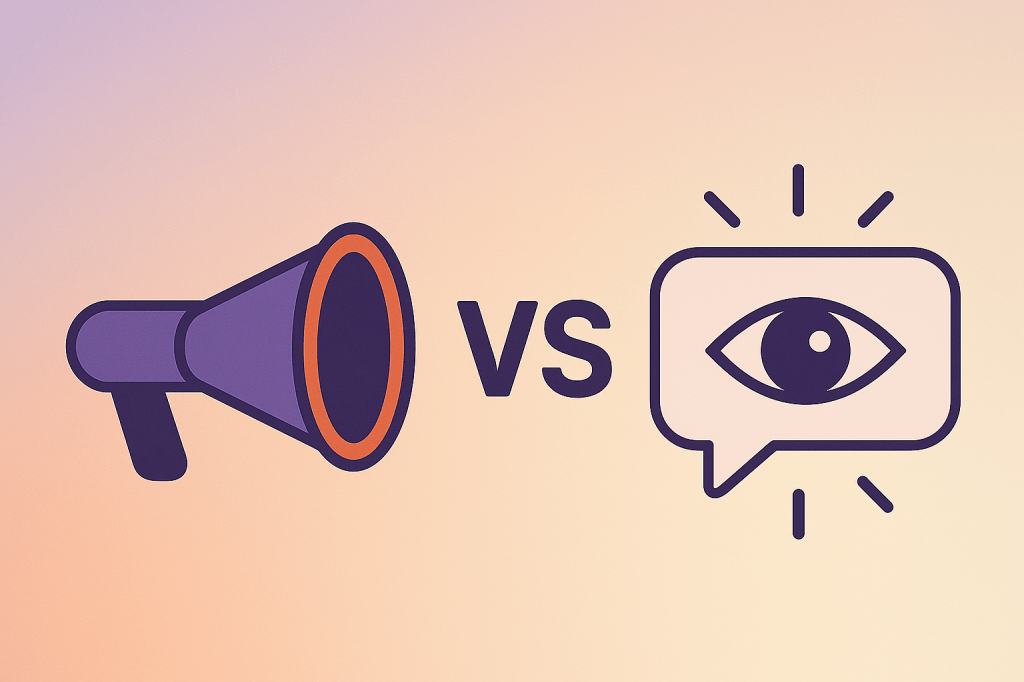
In the simplest terms, Reach is the total number of unique users across your content. This term may bring to mind an image of a marketer with a megaphone in the middle of a busy intersection, reaching out to as many individuals as possible.
To illustrate how Reach functions in audience engagement, imagine this scenario:
You’re the marketer of a new fitness app that’s just entered the market. You launch a social media campaign sharing videos featuring quick, engaging home workouts. By using social media analytics tools, you can measure the Reach of your campaign. It would be the total number of unique users who have seen any of your workout videos.
If a user scrolls past your video on their Instagram feed or it appears in their YouTube recommendations, they have been reached by your campaign. If this user shares your video on their social media profile, and one of their followers sees it, this adds another unique user to your Reach.
A well-executed social media strategy that achieves elevated Reach implies your content has successfully permeated a vast cross-section of users, effectively enhancing your brand’s visibility and potential for audience engagement.
What is Impressions?
The idea of Impressions provides a deeper level of comprehension when analyzing audience engagement. An Impression is noted every time your content displays on a user’s screen, regardless of any further engagement activities like clicks, comments, or shares.
Let’s consider an example to demonstrate how Impressions operate within the realm of audience engagement:
Suppose you decide to run an advertisement campaign on a popular social media platform for a new line of sustainable clothing your company has launched. Every time your ad appears on a user’s feed, an Impression for that ad is counted. This metric remains the same whether the user scrolls past your advertisement, pauses to glance at it, or clicks on it for further information.
To put it simply, Impressions are like a digital billboard in a bustling intersection. Each passing glance counts as an Impression, and the more traffic the intersection sees, the more Impressions your content will receive, increasing its overall visibility.
By monitoring Impressions, you can obtain valuable insights into your ad’s visibility and potentially identify patterns that may influence its exposure level, resulting in more strategically planned and executed advertising campaigns for effective audience engagement.

Reach and Impressions Metrics Comparison
Comparing Reach and Impressions side by side can help marketers understand the interaction between these important metrics. It’s essential to understand the difference between these two metrics to make informed decisions on allocating resources and devise a comprehensive marketing strategy. Here’s a brief summary of their distinct characteristics:
- Frequency: While Reach delegates the unique visitors who viewed your content, Impressions quantify total exposure or the number of times your content popped up on users’ screens. Impressions might significantly exceed Reach as the same user could encounter your content more than once. For example, if a user scrolls through their social media feed and sees your ad twice, it would count as two Impressions but only one Reach since it’s the same user.
- Nature of measurement: Reach measures the spread of your content across a unique user base, akin to casting a wide net. Conversely, Impressions emphasize repeated exposure, akin to the frequency with which your content billboard pops up in the viewer’s sight.
- User engagement insight: A higher Reach number reflects your brand’s potential audience size. Simultaneously, a higher Impressions count could imply frequent content visibility, increasing chances of engagement.
To gain deeper insights into these metrics in real-world scenarios, it can be useful to examine examples of company dashboards. Marketers are using more data than ever to inform their strategies, making it essential to understand the nuanced differences between Reach and Impressions. By doing so, you can develop a more customized and effective audience engagement strategy that considers the unique characteristics of your target audience and the platforms you use to reach them.
Additionally, analyzing real-world examples can help you identify trends and patterns in your audience’s behavior that can inform your strategy and help you stay ahead of the competition.
Interpreting Reach and Impressions Data
Understanding the data from Reach and Impressions can provide valuable insights into the effectiveness of your campaign. By interpreting these metrics effectively, you can identify areas for improvement in your content strategy, ensuring that your message not only reaches a broader audience but also resonates deeply, encouraging continued engagement.
- High Reach, Low Impressions: This scenario may suggest that while your content is being exposed to a wide audience, it might need to be more compelling to warrant repeated views or substantial engagement.
- Low Reach, High Impressions: In contrast, a smaller Reach but higher Impressions indicate that your content effectively engages a smaller audience segment, potentially prompting frequent revisits and higher user interactions.
Leveraging Data Analytics for Enhanced Decision-Making
Utilizing data analytics allows marketers to gain deeper insights into customer behavior, leading to more informed decisions and improved campaign performance. For instance, businesses that incorporate data analytics into their marketing strategies can experience a significant increase in ROI.
Key benefits of data analytics in marketing include:
- Understanding Customer Behavior: Analyzing user interactions helps identify what drives engagement and conversions, allowing for tailored marketing messages.
Improved Targeting: Data-driven insights enable precise audience segmentation, ensuring that marketing efforts reach the most relevant consumers. - Performance Measurement: Continuous analysis of campaign metrics facilitates real-time adjustments, optimizing effectiveness.
Leveraging the expertise of an Excel consultant can help you analyze audience data more effectively, identifying trends in your Reach and Impressions that may otherwise go unnoticed. By refining your data approach, you can optimize decision-making and campaign execution.
Implementing Cloud-Based Archiving Solutions
Adopting cloud-based archiving solutions offers scalability and cost-efficiency, essential for managing large volumes of marketing data. A survey by the Cloud Security Alliance revealed that 71% of organizations have adopted cloud-based data archiving solutions.
Advantages of cloud-based archiving include:
- Scalability: Easily adjust storage capacity to accommodate growing data needs.
- Cost Efficiency: Reduce expenses associated with maintaining on-premise storage infrastructure.
- Enhanced Security: Benefit from advanced security measures implemented by cloud service providers.
Optimizing Content for Maximum Engagement
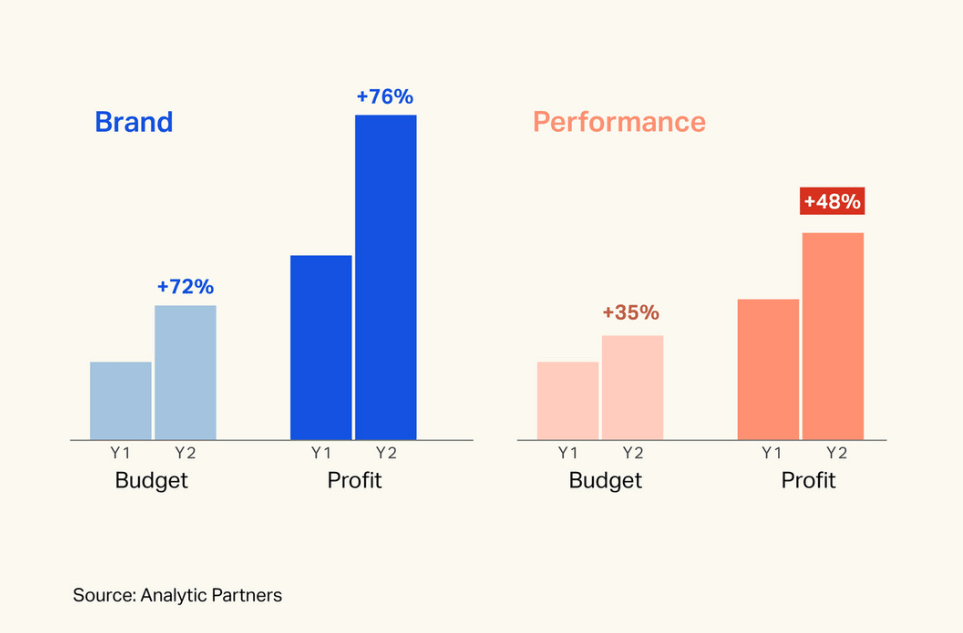
Refining your content strategy is crucial for increasing both reach and impressions. Integrating brand and performance marketing can lead to a 25-100% increase in ROI, with the ideal budget allocation being 40-60% towards brand marketing.
Strategies for content optimization include:
- Personalization: Tailor content to resonate with specific audience segments, enhancing relevance and engagement.
- Multichannel Integration: Ensure consistent messaging across various platforms to reinforce brand identity and reach a broader audience.
- Interactive Elements: Incorporate interactive features such as polls, quizzes, or videos to boost user engagement and dwell time.

Final Thoughts
What do Reach and Impressions really tell you about your audience?
In a world where digital noise is louder than ever, these metrics are more than just numbers—they’re signals. Reach tells you who’s hearing your message, while Impressions hint at how often they’re seeing it. But the real magic happens when you start to connect these numbers to real behavior, engagement, and impact.
Use these metrics not only to measure visibility but also to ask smarter questions:
- Are we speaking to the right people?
- Is our content worth a second look?
- How does our visibility influence action?
When you treat Reach and Impressions as tools for discovery rather than final answers, you turn your campaigns into ongoing experiments—measurable, improvable, and more human.
So, next time you check your analytics dashboard, ask yourself: What story are these numbers trying to tell? That curiosity could be the first step toward your next big win.
FAQ: Reach vs. Impressions
Q: What is the main difference between Reach and Impressions?
A: Reach counts unique users who see your content, while Impressions track how many total times your content is displayed—whether to the same user or different ones.
Q: Why do Impressions often outnumber Reach?
A: Because a single user can see the same piece of content multiple times, leading to higher Impressions than Reach.
Q: Is a higher Reach or higher Impressions better?
A: It depends on your goals. High Reach is great for brand awareness; high Impressions may indicate strong content visibility or audience interest.
Q: Can Reach and Impressions help improve engagement?
A: Absolutely. Monitoring these metrics helps you understand what content works, refine your strategy, and better connect with your audience.
Q: Do both metrics matter for SEO or organic performance?
A: While not direct SEO ranking factors, strong Reach and Impressions often indicate content that’s valuable and shareable—two traits search engines reward over time.


Leave a comment