
The Data Overload Dilemma
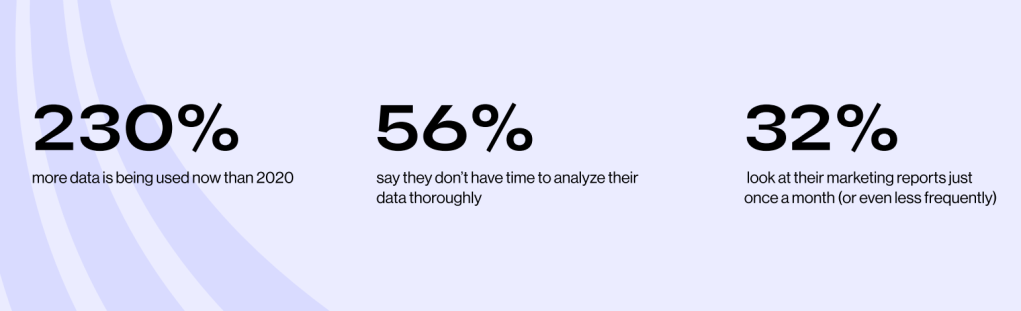
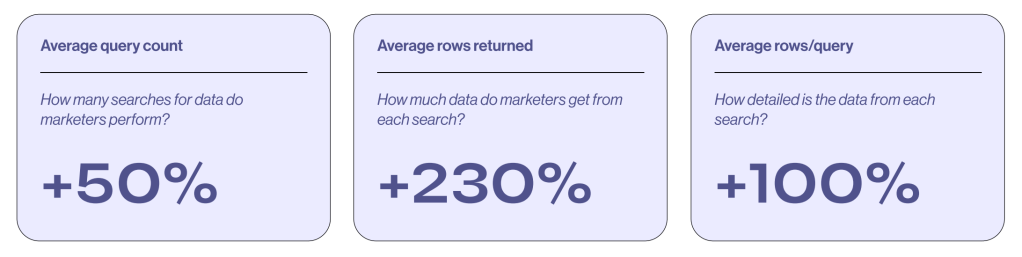
In 2020, marketing teams were already handling an enormous influx of data. Fast forward to 2025, and the volume of data used has skyrocketed by 230%. At first glance, this seems like a win. More data means better decision-making, right? Not exactly.
According to Supermetrics’ latest marketing data report, marketers are soaking in data but starving for insights. Despite having access to more granular metrics, only 7% of marketers feel they have enough time to analyze their data suitably.
This eruption of data is frequently paralyzing teams, instead of helping them make better decisions. Marketers find themselves spending more time collecting and organizing data than actually using it to drive strategy. The irony? Even with all this information at their fingertips, many still struggle to answer the most fundamental questions. Which channel is performing best? Where should we allocate more budget? What’s truly driving conversions?
Why More Data Doesn’t Mean More Insights
It’s easy to assume that having more data leads to wiser marketing decisions, but that’s not necessarily true. The more data marketers collect, the more complex the analysis becomes. Without a clear strategy, they risk getting seized in a loop of analysis paralysis, where the unsubstantial volume of numbers makes it harder to extract meaningful insights.
Some key issues contributing to this problem include:
- Data fragmentation – Information is scattered across multiple platforms, making it difficult to get a unified view. Many marketing teams pull data from Google Analytics, Meta Ads, CRM systems, email platforms, and various third-party tools. Without proper integration, they lack a cohesive picture of what’s happening.
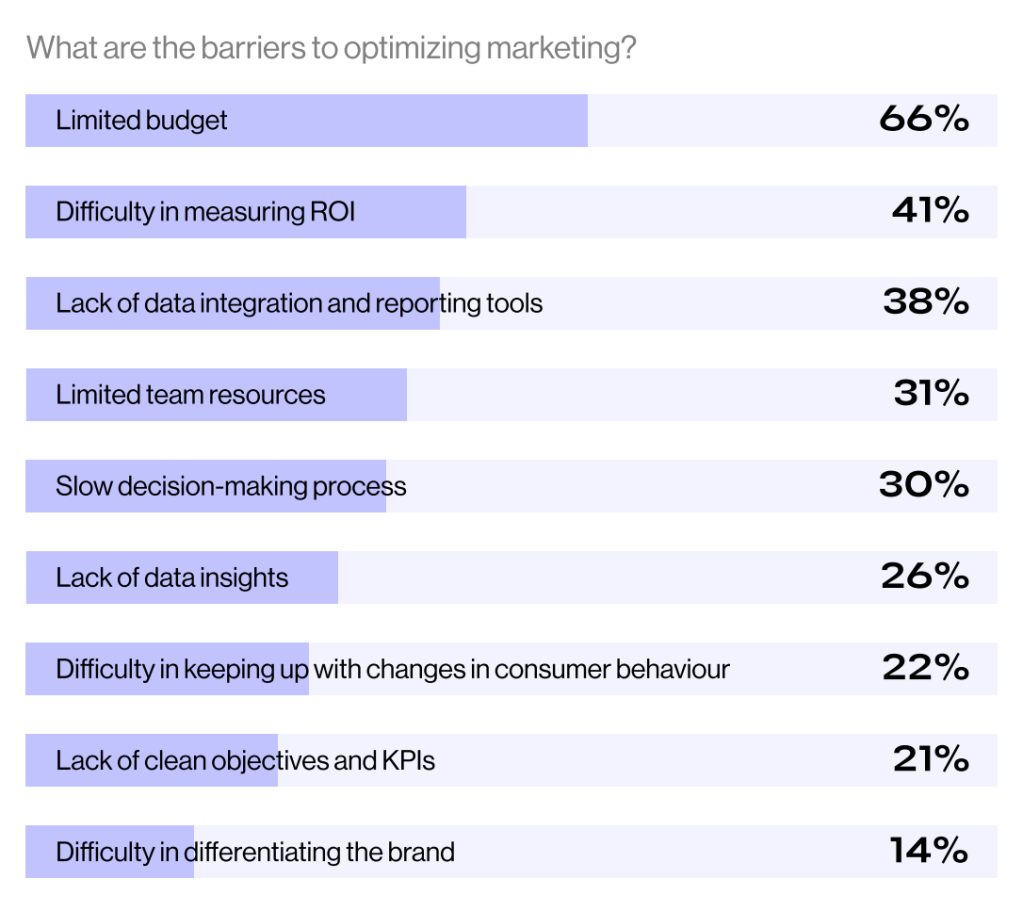
- Lack of integration tools – 38% of marketers say poor integration hinders their ability to optimize campaigns. And we’re concluding that valuable insights are lost because data is stuck in silos rather than being connected in a meaningful way.
- Time constraints – With more data to sift through, marketers struggle to identify what truly matters. According to the report, 56% of marketers don’t have enough time to analyze their data properly, leading to rushed decision-making or gut-feeling choices instead of data-backed strategies.
If I just take someone’s temperature every 10 minutes and end up with a lot of data but haven’t defined what counts as good or bad, the data is worthless, and I’ll drown in it. The same applies to marketing—without clear definitions, data alone won’t help.” Bartosz Schneider, Principal Data Strategist, Supermetrics
The Need for Smart Data, Not Just Big Data
Supermetrics’ report suggests that marketers don’t need more data; they need the right data—data that is actionable, accessible, and aligned with business goals. The challenge isn’t about collecting more numbers; it’s about filtering out the noise and identifying the metrics that truly drive impact.
Here’s how marketing teams can regain control:
1. Identify Core Metrics That Drive Revenue
Not all metrics are created equal. Marketers need to shift their focus from vanity metrics—such as impressions, likes, or page views—to KPIs that directly impact the bottom line. Metrics like customer acquisition cost (CAC), return on ad spend (ROAS), and customer lifetime value (CLV) provide clearer insights into profitability and marketing efficiency.
2. Integrate Data Across Channels for a Holistic View
Fragmented data leads to disjointed strategies. If social media performance is being measured separately from email marketing or paid ads, teams won’t get the full picture of how customers interact with their brand. A unified analytics platform can help combine these sources, making it easier to track cross-channel performance.
3. Automate Data Collection and Reporting
Manual data collection is a thing of the past. Too many teams still rely on spreadsheets and manual exports, which are time-consuming and prone to errors. Automated reporting tools and AI-driven analytics can cut through the noise and surface real-time insights, helping marketers make faster, smarter decisions.
4. Prioritize Quality Over Quantity
Instead of hoarding data, marketers should focus on data accuracy, relevance, and usability. A smaller, well-structured dataset with clear benchmarks is far more useful than an overwhelming amount of raw information.
5. Measure What Truly Matters
Ultimately, marketing success should be tied to business impact. Instead of obsessing over reach and engagement metrics, marketers should track conversions, sales impact, and customer retention to understand the true effectiveness of their campaigns.
The Hidden Cost of Data Overload
Beyond wasting time and resources, excessive data collection can lead to misguided decisions. When marketers rely on hyper-granular insights without proper context, they may end up optimizing for the wrong metrics—allocating more budget to campaigns that appear to perform well in isolated reports but don’t contribute to overall revenue growth.
For example, a social media ad campaign might show a high click-through rate (CTR), leading marketers to double down on spending. But if those clicks don’t translate into actual sales, the investment is misplaced. Without connecting CTR data with conversion rates and revenue impact, marketers risk making decisions based on surface-level insights.
The Role of SEO and Content Optimization in Smart Data Usage
One area where data overload is particularly evident is in SEO and content optimization. Marketers are tracking keyword rankings, search intent, bounce rates, and backlinks, but without a structured approach, they risk missing the insights that truly matter. Instead of fixating on keyword density or superficial engagement metrics, teams should leverage data analytics to identify patterns in user behavior and conversion paths. By aligning SEO efforts with actual revenue impact rather than vanity metrics, businesses can ensure their content strategies are both data-driven and results-oriented.
How Excel Consultants and Data Archiving Can Help
For many marketing teams, Excel remains a go-to tool for managing large datasets. However, without advanced knowledge of formulas, pivot tables, and automation techniques, spreadsheets can become yet another bottleneck. Excel consultants can help optimize workflows by automating data processing, building dynamic dashboards, and creating predictive models that transform raw numbers into actionable insights. Additionally, data archiving plays a crucial role in managing historical performance trends. Instead of drowning in outdated reports, marketers can use structured archives to compare past and present campaign performance, uncovering long-term trends that inform future strategy.
Bridging the Gap Between Data and Decision-Making
At the end of the day, having access to data isn’t enough—it needs to be actionable, integrated, and optimized for decision-making. Whether it’s refining SEO tactics, enhancing content strategies, or leveraging data analytics for smarter budgeting, marketing teams must shift from passive data collection to proactive data utilization. By investing in the right tools, automation techniques, and expertise—such as Excel consultants for data modeling and data archiving for historical insights—marketers can break free from data paralysis and finally start making smarter, more strategic decisions.
The Bottom Line
More data is not the solution—it’s often part of the problem. Without the right approach to analysis and integration, marketing teams will continue to be buried under an avalanche of numbers. The future belongs to those who know how to use less data, more effectively.
By focusing on quality over quantity, integrating data sources, and leveraging automation, marketers can overcome data paralysis and make decisions that truly drive growth.
The question isn’t how much data you have, but whether you’re using it wisely.

